

Chapter 2 - The City of Wrong Angles
The world has been edited. Her sibling was deleted. And she's already starting to forget why she's searching.
The city was wrong.
She'd been here a month and she still couldn't figure out how. The buildings stood where buildings should stand. The streets ran in reasonable directions. The harbor opened onto the sea like every other harbor in the world.
But something was off, something in the geometry, like the whole place had been drawn by someone who'd only heard about cities secondhand.
She walked down Merchant's Row toward the pawnshop, her bag heavy with the last things she could afford to sell. A brass compass that didn't work anymore, a knife with a chipped blade, a ring she couldn't remember getting but couldn't bring herself to wear.
The morning crowd flowed around her. Fishmongers shouting prices, sailors stumbling home from night shifts, women with baskets balanced on their heads moving through the chaos like they'd been doing it their whole lives.
All of it normal. Except for the way the shadows fell.
She stopped at the corner of Merchant's Row and whatever the cross street was called, then looked up at the buildings on either side. Both three stories, both brick, both casting shadows onto the cobblestones below.
The shadows didn't match.
The building on the left threw a shadow that was too long while the one on the right threw one that was too short, like they were being lit by different suns.
She'd noticed it before, noticed a lot of things like it. Streets that curved when they should have been straight. Staircases that had one too many steps. A plaza in the center of town with seventeen statues but records that mentioned only twelve.
Nobody else seemed to notice. Or maybe they noticed and just didn't care. People were good at not caring about things that didn't make sense. Easier to smooth over the gaps than ask questions that didn't have answers.
She kept walking.
The pawnshop was three blocks down, wedged between a rope maker and a place that sold nothing but candles. The owner was a thin man with spectacles and the kind of patience that came from years of dealing with desperate people.
She was desperate people. Had been for months.
"Back again." He didn't make it a question.
She set the bag on his counter. "Need to sell."
He opened the bag and looked inside. His face didn't change but something in his eyes did. Pity, maybe, or just the calculation of someone who knew he could lowball her and she'd take it anyway.
"The compass is broken."
"I know."
"The knife is nearly useless."
"I know."
He picked up the ring and turned it over in his fingers. Simple silver band, nothing special about it except the weight of it in her pocket had started to feel like too much.
"This has some value. Not much, but some."
"Fine, take it all. Whatever you'll give me."
He named a number. It was less than she'd hoped and more than she'd feared. Enough for another two weeks in the boarding house, enough for food that wasn't bread and fish scraps, enough to keep going.
She took the coins without counting them. Didn't matter if he'd shorted her. What was she going to do about it?
"You look tired," the pawnshop owner said. Almost kind.
"I am tired."
"Whatever you're looking for, maybe it's not worth finding."
She thought about the journal in her bag, the pages going blank, the name she couldn't remember.
"It's worth it."
He shrugged. People said things in pawnshops, made declarations they couldn't back up. He'd probably heard a hundred versions of her same desperate certainty.
She left before he could offer more wisdom she didn't need.
The market was three streets over. Open square, makeshift stalls, the smell of spices and fish guts and something sweet she couldn't identify. She bought bread, dried meat, and a small bottle of ink because she was almost out and the journal needed ink more than she needed food.
That last part was probably crazy. Buying ink over meals. But if she couldn't write things down they disappeared faster, and if things disappeared faster she'd forget sooner, and if she forgot sooner then none of this mattered anyway.
So ink it was.
She was counting her remaining coins when she saw the old woman.
Sitting at the edge of the market, not selling anything, not buying anything. Just sitting there with a basket of dried flowers in her lap, weaving them into something. A crown, maybe, or a wreath.
Nothing strange about that. Except for the flowers themselves.
They were blue. Bright, vivid blue, the kind of blue that didn't exist in nature, or at least didn't exist in any nature she'd seen. And the old woman was humming while she worked, a melody that felt familiar in a way that made her skin prickle.
She crossed the market and stopped in front of the woman.
"What are you making?"
The woman looked up and smiled. Missing teeth and kind eyes and the particular stillness of someone very old.
"Crown for the Forgetting Day. Same as every year."
"Forgetting Day?"
"Ninth day of the Harvest Month." The woman's fingers kept working, weaving blue flowers into a circle. "Don't tell me you've forgotten." She laughed at her own joke, and the laugh went on too long.
"I've never heard of Forgetting Day."
"Everyone's heard of Forgetting Day. It's the oldest holiday there is. We wear the blue flowers, walk backwards through the streets, don't speak the names of the dead." The woman held up her work, admiring it. "My grandmother made these crowns. Her grandmother before her. All the way back to the beginning."
"The beginning of what?"
But the woman was already looking past her, already moving on to something else. Whatever moment of clarity she'd had was fading.
She tried again. "Forgetting Day. When is it?"
"I told you. Ninth day of the Harvest Month."
"That's three days ago."
The woman frowned and looked at her basket of flowers, then at the half-finished crown. Confusion moved across her face like clouds across water.
"That can't be right. I only just started making them."
"You said you make them every year. Your grandmother made them. Everyone knows about it."
"Everyone does know about it." But there was doubt now. The woman set down the crown and looked at her hands like she wasn't sure they belonged to her. "Don't they?"
She could see it happening, the same thing that had happened to the sailor. The edges of memory going soft, the certainty fading into questions that couldn't be answered.
"Never mind," she said. "I'm sure you're right."
"I'm sure I am too." The woman picked the crown back up and started weaving again. The humming resumed, but quieter now. Uncertain.
She walked away before she could watch the rest of it.
Forgetting Day.
She found a spot by the harbor wall where she could sit and think without being bothered. Fishing boats came and went while gulls screamed overhead, and the air smelled of salt and tar and things that had died in the water.
She opened the journal, found a blank page, and started writing.
Forgetting Day. Blue flowers. Walking backwards. Not speaking the names of the dead. Old woman in the market knew all about it. Nobody else has ever heard of it.
She paused to think about what she'd seen, then added more.
The holiday is supposed to be the oldest one there is. But there's no record of it anywhere. No mention in any of the local histories I've found. No blue flowers in any of the shops except the ones in her basket.
It's like she's celebrating something that got cut out of the world. Something everyone used to know and now doesn't.
That was the pattern, the one she kept finding everywhere. Things that didn't fit. Pieces that had been removed and left jagged edges behind.
The sibling had noticed it first. Years ago, before any of this started. Had asked questions that nobody could answer.
Why does the river flow backwards in the narrows?
Why do the old maps show three moons when there's only one?
Why does everyone know the words to that song but nobody remembers who wrote it?
She'd told them to stop asking. Said they were going to get in trouble if they kept poking at things that didn't make sense.
But they hadn't stopped. They'd kept poking, kept asking, kept collecting the broken pieces like smooth rocks on a beach.
And then one day they'd found something big, something real, something that proved the world wasn't what it appeared to be.
And then they were gone.
She closed the journal. Her eyes burned. Three weeks of no real sleep and the grief was always right there, waiting. The grief and the guilt and the knowledge that she'd told them to stop and they hadn't listened and maybe if she'd just listened instead of dismissing them none of this would have happened.
She stood up. The coins in her pocket clinked together. Enough for two more weeks, another few meals, ink. Not enough for answers.
The Cartographer's Daughter. That was the lead, the words that had appeared in the journal without her writing them. Someone who knew about the seams.
She'd asked around carefully, never saying too much, never explaining why she needed to know. Most people hadn't heard of anyone by that name. A few had looked at her strangely, like she'd asked about something they should know but couldn't quite remember.
One person had given her something useful. A fisherman who'd had too much to drink and was talking to anyone who'd listen.
"The lighthouse," he'd said. "Edge of the world. That's where the map woman lives. But the road plays tricks. Most folks give up before they get there."
Edge of the world, where the road plays tricks. Normal directions, normal advice, but nothing about this place was normal.
She walked back through the market. Past the old woman who was still weaving her crown, humming her song, celebrating a holiday that might never have existed. Past the stalls selling fish and bread and things she couldn't afford. Past the corner where the shadows fell wrong and nobody seemed to notice.
The boarding house was waiting for her, her tiny room with its single window and its smell of salt and rot. She'd pack tonight and leave tomorrow morning.
Find the road that played tricks. Find the woman who knew about the seams. Find out what the sibling had discovered before they were erased.
She passed the plaza with the seventeen statues on her way back and stopped to count them again.
Seventeen, same as yesterday, same as last week.
But the plaque at the base said there were supposed to be twelve. Dedicated to the twelve founders of the city. Twelve names carved in bronze.
So where had the other five come from?
She walked closer and looked at the extra statues. They were the same style as the others, the same stone, same craftsmanship, same weathered faces staring out at nothing. But the bases where their names should be were smooth and blank, like someone had carved the statues and then forgot who they were supposed to represent.
Or like someone had erased the names and left the monuments behind.
She reached out and touched one of the nameless faces. Cold stone under her fingers, a real thing that existed in the world.
Proof that something was missing. Proof that the gaps were everywhere, if you knew how to look.
She'd known how to look once. The sibling had taught her, had shown her the cracks in the world and asked her to believe.
She hadn't believed. Had thought it was imagination, games, the kind of thing kids did when they were bored and wanted the world to be more interesting than it was.
But the sibling had been right. About all of it.
She let her hand fall. The statue stared past her, its blank base gleaming in the afternoon light.
Seventeen statues for twelve founders. Five mysteries that nobody was asking about.
She turned away and headed back to the boarding house. Tomorrow she'd leave, find the road that played tricks, follow it to the edge of the world.
Tonight she'd write everything down. The old woman, the holiday, the statues, all the broken pieces she'd collected in a month of watching this city that wasn't quite right.
And she'd pray that when she opened the journal tomorrow, the words would still be there.
The room was the same as she'd left it, small and dark. The candle stub she'd been rationing for the past week sat on the table by the window.
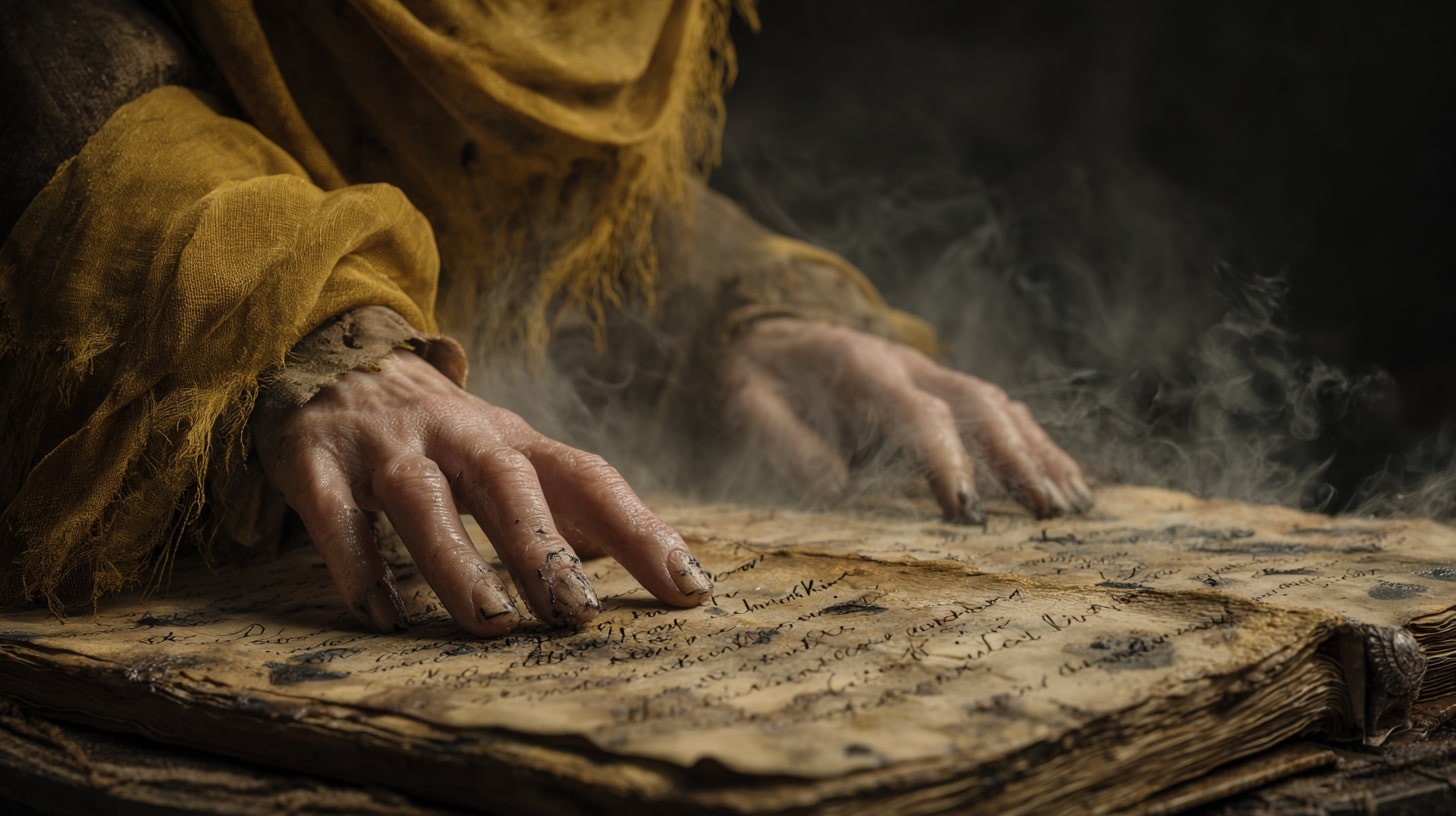
She lit it, sat down, and opened the journal.
For a long moment she just looked at the pages. The entries that remained and the blank spaces where entries used to be. The handwriting that was hers and the handwriting that wasn't and the scribbled notes in margins that she couldn't remember making.
Then she started writing.
The city is full of seams. I can see them now. Places where things don't fit. Shadows that fall wrong. Streets that go nowhere. Holidays no one else remembers.
They saw it first. Years ago. I thought they were making it up. Thought they just wanted the world to be stranger than it was.
They were right. About all of it. And I didn't listen.
She stopped and rubbed her eyes. The words were blurring from exhaustion or tears, she couldn't tell anymore.
Tomorrow I leave. The Cartographer's Daughter. Edge of the world. Road that plays tricks.
I don't know if I'll find answers. Don't know if answers even exist. But I have to try.
Because if I stop trying, they disappear completely. And I can't let that happen.
I won't let that happen.
She closed the journal and held it against her chest, the same way she'd held it every night for the past six months. The leather was soft from handling. The pages were warped and stained. The whole thing was falling apart, same as her memories.
But it was all she had.
And tomorrow she'd take it with her, out of this city of wrong angles, down a road that played tricks, toward a woman who might have answers. Or might be another dead end, another person who forgot while she watched.
She blew out the candle, lay down on the bed, and stared at the ceiling in the darkness.
Sleep didn't come. It never did anymore.
But morning would, and with it the next step.
That would have to be enough.
Table of Contents
Get World Updates
Be notified when new stories or content are added to this world.