A magic system breaks a story the moment the magic becomes free. Not free of mana or spell components. Free of consequence.
If a character can solve a problem and nothing else in the world shifts because they did, the magic isn't a system. It's a plot solvent, and it dissolves tension every time you reach for it.
The fix isn't more rules or a longer glossary. The fix is treating magic the way you'd treat any powerful resource.
Somebody has to have access and somebody doesn't. Using it has to cost the user something they'd rather keep. And every use has to ripple outward into the economy and the society around it, because power that leaves no wake isn't power.
It's a wish. Build the wake first and the rules mostly write themselves.
That's the spine of this whole guide, and of every article in this category. Magic is an economy.
The best fictional systems, the ones readers argue about years later, all distribute their power like a scarce good with owners and prices and black markets. The broken ones hand out abundance and then act surprised when the story has nothing left to push against.
Here's the ground this guide covers, and the order it moves in:
- Why magic systems collapse (three specific failure modes)
- The source, access, and cost trinity that every working system rests on
- Limitations, split into natural, social, and personal
- The economic and social ripples that make magic feel real
- Stress-testing your system to find the exploits before your readers do
- Growing power over a series without power creep eating the tension
If you want the wider frame, magic is one department inside the larger machine of worldbuilding, and it behaves best when it's wired into the rest of that machine rather than bolted on the side.
Why Magic Systems Collapse
Most broken systems aren't broken for lack of imagination. They're broken because the writer treated magic as a feature to add instead of a resource to ration.
Three failure modes account for almost all of it.
The power fantasy with no floor
This is the ability chosen because it would feel good to have, then never priced. Teleportation is the classic.
It reads as pure upside until chapter three, when you realize no army needs roads, no vault stays sealed, and no chase can ever be tense again because the person being chased can simply be somewhere else.
The problem was never teleportation. Plenty of stories teleport.
The problem is granting a capability and refusing to ask what it costs and who it locks out, which leaves the ability doing whatever the plot needs in the moment. That's not a power. It's a mood.
The kitchen sink
Powers get added the way toppings get added at a frozen yogurt counter. A little elemental control, some mind reading, a dash of prophecy.
The trouble is that abilities don't add, they multiply. Each new power interacts with every existing one, and the interactions are where the exploits live.
Mind reading plus prophecy plus teleportation isn't three neat tools. It's a character who can see the plan, know it's coming, and already be gone.
A tight system with two well-priced abilities generates more story than a sprawling one with ten, because you can actually reason about what two things do together.
The missing price
The quiet killer. The powers are cool, the limits are stated, and yet nothing meaningful is spent to use any of it.
And cost here doesn't mean a mana bar. A mana bar is bookkeeping. Real cost is social, economic, and personal.
If healing magic exists and costs nothing real, no one in your world dies of anything curable, which means your world has quietly become a place where death is optional and you now have to explain every death you write. If magic can conjure food for free, farming is dead and so is any story that depended on scarcity.
Le Guin understood this better than almost anyone. In Earthsea, magic is bound by an Equilibrium, a cosmic balance, and calling rain over your field means drought somewhere downwind.
The cost isn't paid at a counter. It's paid by the world, and the wizard who forgets that is the one who breaks something.
The through line across all three: the collapse happens the instant magic stops being scarce. Scarcity is what gives every other element something to hold onto.
The Trinity: Source, Access, and Cost
Underneath every system that holds up, there are three questions answered clearly and answered together, because the answers constrain each other.
Where does the power come from, who gets to use it, and what does using it take out of you.
Where it comes from
The source is not flavor. It's the constraint generator.
Pick starlight and you've just decided that magic weakens at noon, dies under cloud cover, fades in cities drowned in their own light, and concentrates on mountaintops and in deserts. You didn't add those rules.
The source implied them, and readers will feel the difference between limits that grow out of the source and limits you stapled on to plug a hole.
The strongest sources double as physics. Rothfuss builds sympathy in The Name of the Wind on plain energy conservation.
To move heat or force from one place to another, you draw the energy from somewhere, usually your own body burning its warmth, and the transfer is never perfectly efficient, so some of it always bleeds away as waste. Push too hard and you pull the heat out of your own blood and die of it.
Nothing about that needs a special exception because it runs on a law the reader already trusts. The source did the work.
Who can use it
This is where most systems go soft, because it's tempting to let anyone learn magic with enough study. Resist it.
If access is universal and cheap, every non-magical institution in your world should already be extinct, and the fact that they aren't reads as an oversight. Access has to be gated, and the gate has to make sense.
Avatar gates bending by birth and culture. You're born to it or you aren't, and which element you can bend is tied to your nation, which means bending is wrapped up in identity, politics, and war before anyone throws a punch.
The gate isn't a lock on a door. It's the reason the map has borders.
Decide who's in, who's out, why the line sits where it does, and what happens to the people on the wrong side of it, and you've generated more conflict from the access question alone than most systems get from their entire spell list.
What it costs
Cost is what turns a power into a decision. Sanderson's Allomancy is the cleanest demonstration in the genre.
A Mistborn burns metals for power, and the metals are finite, physical, and swallowed in advance. Run out mid-fight and you are simply out, no deus ex machina, no last-second reserve the reader didn't know about.
The cost is legible, it scales, and it's paid up front, which is exactly why readers cheer when a character wins inside those rules instead of groaning that magic bailed them out.
Good cost does four things at once. It scales with the power drawn. It forces a trade-off worth agonizing over.
It touches the user and the world, not just a number on a sheet. And it seeds conflict, because anything expensive enough to matter is worth fighting over.
Miss any of those and the cost is decoration.
| Trinity element | Question it answers | What it generates | Failure if skipped |
|---|---|---|---|
| Source | Where does power come from | Natural limits, geography, scarcity | Rules feel arbitrary and bolted on |
| Access | Who can use it and why | Class, politics, conflict, identity | Non-magical world makes no sense |
| Cost | What using it takes | Stakes, trade-offs, meaningful choices | Magic solves everything, tension dies |
For a deeper build-out of how these three pieces interlock into a full ruleset, the magic system elements breakdown treats each as its own component, and the magic system rules guide goes further on cost and limitation as the load-bearing part.
Limitations: Natural, Social, and Personal
Limitations are not the opposite of power. They're the thing that makes power legible.
A capability with no edge is a fog. A capability with a hard boundary is a tool the reader can hold and predict and root for.
Limits come in three layers, and a system that only uses one feels thin.
Natural boundaries
These fall straight out of the source, which is why they never feel arbitrary. Starlight magic that only works at night, weakens under cloud, and needs a clear line to the sky isn't following rules you invented.
It's following its own nature.
Natural limits are the cheapest to make believable and the first line of defense against a system that does too much, because the reader accepts them the moment they accept the source.
Social restrictions
This is where magic stops being a personal ability and becomes part of a civilization. Who licenses it, who bans it, which uses are sacred and which are blasphemy, what a guild will and won't teach an outsider.
Social limits are powerful precisely because they can be broken. A natural law can't be violated, but a taboo can, and a character who breaks one pays a human price, not a physical one.
That's where a lot of the best magical conflict actually lives, in the gap between what the magic can do and what a society will let you do with it.
Personal costs
The layer that makes magic hurt. Physical damage, mental erosion, addiction, the slow social isolation of becoming something other people fear.
Personal cost is what turns a power into an internal conflict, the character weighing whether this particular use is worth what it will take out of them.
It's also the layer that keeps a protagonist from becoming a walking solution. If every spell leaves a mark, restraint becomes characterization.
The layers compound. Natural limits make the magic predictable, social limits make it political, personal limits make it human.
Stack all three and a single ability can generate a plot, a power structure, and a character arc at the same time.
The Ripple Effects: Economics and Society
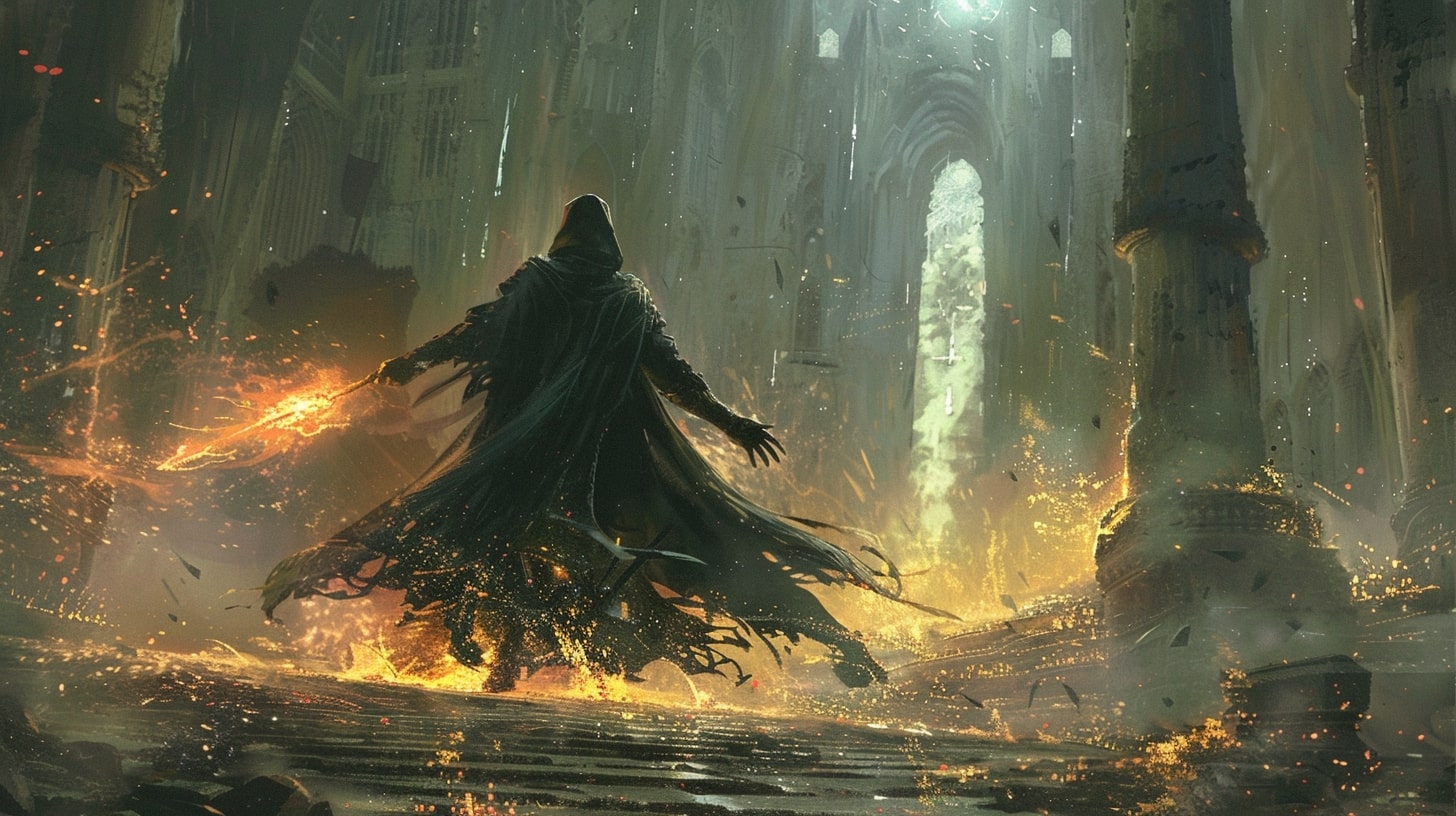
This is the part most systems skip, and it's the part that separates a magic system from a world. Magic is technology with better lighting.
And technology reorganizes everything it touches, so the real test of a system isn't what a mage can do in a duel. It's what the existence of that ability has already done to jobs, prices, laws, and class.
In my own world, Mudwick, magic is saturation, the experiential residue that soaks into places over time. Because the power lives in places, whoever owns the richest saturated sites owns the power. That produced an extraction economy run by thirteen wealthy families who drain junior practitioners for it. I never designed a class system. It fell out of the source.
Run every ability through a few questions and the world builds itself. What jobs does this create. What jobs does it kill.
Who gets rich off it. Who gets exploited by it. What's the black market.
A system that captures and stores emotions in crystals isn't a combat mechanic, it's an economy, the moment you ask who harvests the emotions, who refines the crystals, how the potent ones get priced, and which venues quietly double as harvesting operations by keeping their crowds afraid or ecstatic on purpose.
Follow that logic far enough and the magic starts to stratify society on its own. In my own world, Mudwick, magic runs on residue that experiences leave behind in places, and residue is power.
I didn't sit down to design a class system. I started sketching what a society of practitioners would look like and it organized itself along the same lines as every other economy where access to a resource sets your station.
The families who inherited private access to saturated sites became an aristocracy. Licensed professionals worked for them. Unregistered sensitives at the bottom could feel everything and understand none of it.
It happened because it always happens. A resource plus unequal access plus time equals a hierarchy, and magic is not exempt from that math.
That's the whole reason economic ripples resonate more than forbidden-spell plots. Every reader has stood inside some version of the system that gives you just enough to keep you grateful while quietly taking more than you notice.
You don't need to believe in magic to recognize that arrangement, because you've probably worked in it. Build that recognition into your system and the magic stops feeling invented and starts feeling reported.

Stress-Testing: Break It Before Your Readers Do
Either you break your magic system or your readers break it for you, and they are relentless and unpaid and they will find the loophole at 2 a.m. and post it. Better to get there first.
Stress-testing means putting on the hat of a rules lawyer with a grudge and attacking your own system for exploits.
The exploits cluster in predictable places. Power generation is the first: can power be created from nothing, multiplied without limit, stored forever, or looped so the output feeds the input.
Any yes is a leak. Economic exploits are the second: if a mage can conjure gold or duplicate grain, you no longer have a currency or a famine, you have a plot hole with a market cap.
Social exploits are the third: any ability that lets someone bypass authority without consequence has quietly deleted your power structure.
Then test combinations, because that's where clean abilities turn poisonous. One power that speeds up time in a small area is fine. Another that multiplies force is fine.
Together they're an attack with effectively unlimited force, and you probably won't notice until a reader does.
The exercise is simple and unglamorous. List every ability, pair each with every other, and ask what the pair makes possible that neither does alone. The nasty combinations are almost never the ones you planned.
When you find a break, resist the urge to patch it with a flat new rule that exists only to plug that one hole, because readers smell those. The better fixes come from the layers you already built.
Add a cost that scales specifically with the abuse so the exploit prices itself out. Add a natural limit that falls out of the source.
Or reach for the social layer, which is underused: sometimes the reason nobody duplicates gold isn't that they can't, it's that the guild executes anyone who tries. A social fix often reads more true than a mechanical one, because that's how real systems police their own exploits.
Growth and Power Creep
The last threat comes over time. A magic system has to grow across a series or it goes stale, but growth is exactly how the tight systems die.
You need bigger stakes, so you reveal the heroes can do a bit more than they let on, and then a bit more, and a few books later the careful economy you built is a cartoon where everyone throws mountains at each other and nothing lands.
The distinction that saves you: grow the understanding, not the raw power. The strongest series expand what characters know how to do with the same rules, not how much force they can output.
New applications, cleverer combinations, deeper mastery of a fixed toolkit. The reader still trusts the system because the ceiling never moved, only the skill underneath it.
Sanderson leans on this deliberately, letting characters discover fresh uses of established metals rather than inventing a stronger metal every volume. The rules stay honest and the surprises stay legal.
Bake the room to grow in from the start. Leave a few known-but-unreached limits and established-but-unexplained phenomena, so later revelations feel like discoveries the world was always holding rather than powers you invented to escape a corner.
And hold one rule as you scale: every new capability should arrive attached to a fresh cost or limit, so the ledger stays balanced. Power that grows without new price is the exact definition of the creep that kills tension.
Growth that adds a cost for every capability keeps the whole thing standing.
To go deeper on the two philosophies of how much to spell out as you grow a system, the hard magic system and soft magic system guides lay out the trade-off, and if you're building a specific flavor, the types of magic systems field guide covers fifteen of them with the craft rule each one teaches. For darker builds where the cost is the whole point, the dark magic system, blood magic system, and elemental magic spells breakdowns get specific.
The Working Checklist
Before you trust a system, run it against the questions that matter. If any answer is missing, that's where the next crack will open.
| Question | What a good answer proves |
|---|---|
| Where does the power come from | Your limits grow from the source, not from patches |
| Who can use it, and who can't | The non-magical world still makes sense |
| What does each use cost | Magic forces decisions instead of solving problems |
| What jobs and laws exist because of it | The magic is wired into the economy, not floating above it |
| Why hasn't magic solved every problem already | The story still has something to push against |
| What breaks if two abilities combine | You found the exploit before a reader did |
| How does it grow without getting stronger | The series can escalate without eating its own tension |
Frequently Asked Questions
What makes a good magic system?
A good magic system rations power like a scarce resource. It answers three things clearly: where the power comes from, who can access it, and what using it costs the user and the world.
Beyond that, its abilities ripple into the economy and society, its limits grow naturally from its source, and no ability can quietly solve the story's central problems. The point isn't power. It's that every use forces a meaningful decision.
What are the different types of magic systems?
At the broadest level, magic systems fall along a spectrum from hard to soft. Hard systems state their rules clearly so readers can predict them, like Sanderson's Allomancy. Soft systems stay deliberately mysterious, like the magic in Lord of the Rings.
Within that, systems are often labeled by source: elemental, blood, ritual, divine, true-name, energy-based, and more. The full breakdown lives in the types of magic systems guide.
Do magic systems need rules?
Every magic system needs limits, but not every system needs its rules explained to the reader. Hard magic states its rules openly so readers can anticipate how problems get solved.
Soft magic keeps the rules hidden, which means the author simply must never use it to resolve a conflict, or the mystery curdles into a cheat. Both work. What breaks a story is magic with no limits at all, whether stated or not.
How do you make a magic system feel realistic?
Wire it into the world instead of leaving it floating on top. Give it real costs that touch the user and the society around them, gate access so it stratifies people the way any scarce resource does, and follow it into the economy by asking what jobs, laws, and black markets it creates.
Magic feels realistic when its consequences behave like the consequences of any powerful technology, because readers already know how those play out.
What is the difference between hard and soft magic systems?
Hard magic systems have clearly defined, consistent rules that the reader learns, so characters can solve problems within known limits and it feels fair. Soft magic systems keep their workings vague to preserve wonder, which means they can create problems and atmosphere but shouldn't tidily solve the plot.
Sanderson's First Law captures it: an author's ability to resolve conflict with magic is directly proportional to how well the reader understands that magic.
How do you keep a magic system from breaking a story?
Make sure the magic can't solve the story's core problems for free. Give every ability a cost that scales, test your abilities in combination to find exploits before readers do, and grow the system by deepening what characters understand rather than inflating how much raw power they wield.
A system breaks a story when it becomes free of consequence. Keep consequence attached to every use and it strengthens the story instead.