

What Mama Knows
My daughter stopped sleeping through the night when she was seven.
Not the way little kids do, where they wander into your room and want water or complain about bad dreams. Janelle would sit up in bed at 2 AM and stare at the wall like she was watching something through it. When I'd come in, she'd say things like "Mama, why is that man so sad?" or "There's a lady crying in the backyard but she's not really there."
I told myself it was imagination. You know how kids are, they have wild minds. They process things in strange ways.
Then we visited my mother's old house in Clarksdale and Janelle refused to go inside.
"Something bad happened in there," she said. Wouldn't budge from the car no matter what I promised or threatened. "A long time ago. Mama, I can feel it all over me."
My grandmother had died in that house. Heart attack in the kitchen, 1962. Nobody had told Janelle that. She was seven years old and had never heard the story.
That night I called my Aunt Rochelle, the one nobody in the family talked to anymore. The one who'd moved to New Orleans thirty years ago and supposedly got involved in "strange things."
"Describe exactly what she does," Rochelle said. No hello. No small talk. Just right down to it.
I told her everything. About the staring and the knowing. The way Janelle would sometimes hold her hand up in empty air like she was touching someone's face.
Rochelle was quiet for a long time.
"How soon can you bring her to me?"
We drove to New Orleans that Friday. Six hours in the car with a kid who kept pointing at buildings and telling me what they felt like. The old gas station that felt like "burned sugar." The church that felt like "everyone crying at the same time but also happy." The rest stop bathroom that made her gag before she even got close.
"Baby, you have to stop telling me these things."
"Why?"
Because it scared me. Because I grew up in a world where you went to church on Sunday and worked hard and didn't mess with anything you couldn't explain.
"Because people will think you're strange."
"I am strange, Mama." She said it simply, like she was telling me the sky was blue. "I've always been strange. That's okay."
I didn't know what to say to that. My seven-year-old was already more at peace with herself than I'd ever been.
Rochelle lived in a shotgun house in the Seventh Ward. The porch sagged and the paint was peeling but the yard was immaculate. Flowers I didn't recognize. A garden that seemed too lush for the small patch of dirt it occupied.
Janelle got out of the car before I'd even turned off the engine. She walked straight to the porch and put her hand on the wood.
"It feels like Grandma's kitchen," she said. "But stronger."
Rochelle was standing in the doorway. She looked older than I remembered, gray in her hair now, but her eyes were the same. Sharp and knowing. The eyes of a woman who had seen things she'd never be able to explain to people who hadn't.
"She's got it strong," Rochelle said. "Stronger than anyone in our family for three generations."
"Got what?"
My aunt looked at me the way you look at someone who's about to hear news that will change their whole life.
"Sit down, baby girl. We need to have a conversation."
She told me about practitioners. About people who could feel what places held. About saturation and residue and the way intense experiences leave marks on locations that most people walk through without ever noticing.
She told me about our family history. The grandmother I'd barely known, who'd been a reader before she married a man who didn't approve and made her stop. The great-aunt who'd gone "crazy" in 1943, who'd actually just gotten overwhelmed by a house that held too much grief and didn't have anyone to teach her how to filter it out.
She told me what Janelle was. What Janelle would become, with training. What Janelle might become, without it.
"You can't suppress this out of her," Rochelle said. "I know that's what you're thinking. Send her to therapy. Put her on medication. Tell her to ignore it until she learns to pretend she's normal."
"That's not what I'm thinking."
"It is, though. You're her mother. You want to protect her from a world that won't understand what she is." Rochelle leaned forward. "But trying to shut it down won't protect her. It'll just make her think something's wrong with her. It'll make her doubt everything she knows to be true about herself."
Janelle was in the backyard, playing with whatever invisible things lived in Rochelle's garden. I could see her through the window, talking to the air, laughing at responses only she could hear.
"What am I supposed to do?"
"You're supposed to let me teach her. Let me show her what she is and how to live with it. She doesn't have to be scared. She doesn't have to be alone." Rochelle stood up and walked to the window, watching her great-niece spin in circles among the flowers. "But you have to let her be what she is. You have to love her without trying to fix her."
I wanted to argue. Wanted to say that I'd always loved Janelle for exactly who she was. But I remembered all the times I'd told her to stop talking about the things she saw. All the times I'd changed the subject or turned on the TV or suggested we go somewhere else when she started sensing things that made me uncomfortable.
I'd been trying to fix her when there was nothing to fix.
"I don't know how to live in your world," I said.
"You don't have to. She's the one who lives in it. You just have to love her while she does."
Janelle stayed with Rochelle that summer. I drove back to Memphis alone, the car too quiet, the radio unable to fill the space where my daughter's voice should have been.
I called every night. Janelle talked about learning to "filter" so the places didn't hit her so hard. About understanding the difference between old sadness and recent sadness. About how Aunt Rochelle had a token from a jazz club where Louis Armstrong had played once, and when you held it you could feel what it meant to love music so much it rearranged your whole soul.
She sounded happy. Happier than I'd heard her in months. Maybe years.
"I'm not broken, Mama," she said one night. "I thought I was broken for so long. But I'm not. I'm just different."
I cried after I hung up. Not because she was wrong, but because she'd had to spend seven years thinking she was broken before someone finally told her the truth.
That was my fault. I could have found Rochelle sooner. Could have asked questions instead of looking away. Could have trusted my daughter when she told me she felt things, instead of trying to explain it away.
At the end of the summer I drove back to New Orleans to pick her up. Janelle ran out of the house before I got out of the car, threw her arms around me, pressed her face into my shoulder.
"You feel sad," she said. "And scared. And guilty about something."
I pulled back and looked at her. My daughter. My strange, impossible, miraculous daughter.
"Yeah," I said. "I'm working on it."
"It's okay, Mama. I forgive you." She took my hand and led me toward the house. "Now come meet the ghosts in Aunt Rochelle's garden. They want to say goodbye before we leave."
I let her lead me. I let her show me things I didn't understand and probably never would. I let her be exactly who she was, finally, without trying to make her smaller or quieter or more normal.
That's what mamas are supposed to do, I think. Love their kids through the strange parts. Even when the strange parts scare us. Especially then.
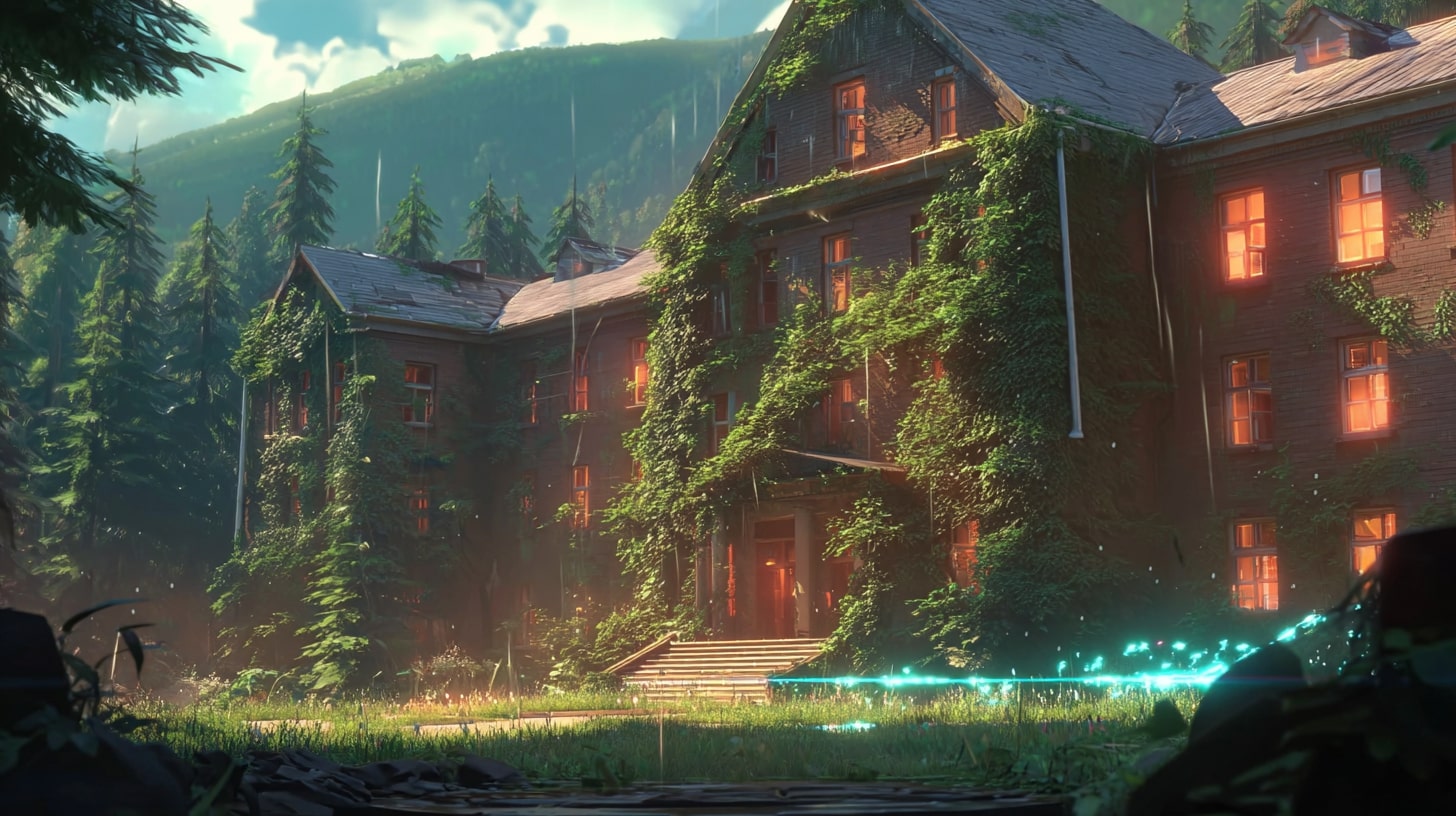
Janelle is nineteen now. She spent two years at a place called Mudwick, learning things I can barely imagine. She reads places the way I read faces, understands layers of history in buildings that look ordinary to me.
She came home last month with a small stone in her pocket. Warm when you hold it. Saturated, she said, with all the love that had passed through her grandmother's kitchen over forty years.
"I made it for you," she said. "So you could feel what I feel. Just a little."
I held that stone and closed my eyes and for just a moment I understood. Not everything. But enough. The warmth of my mother's hands shaping biscuits. The sound of my grandmother's voice singing while she cooked. The accumulation of a thousand meals shared with people we loved.
"Thank you," I whispered.
"You're welcome, Mama." She squeezed my hand. "Thanks for letting me be who I am."
I keep the stone on my nightstand now. Some nights, when the world feels too heavy and I'm not sure I've been a good mother or a good person or anything worth being, I hold it in my palm and let the warmth remind me.
We did okay. Janelle and me.
We figured it out.
Table of Contents
Get World Updates
Be notified when new stories or content are added to this world.