

Sitting With Private Hollis
They brought him to me on a Tuesday evening. Two orderlies carrying a stretcher through the mud, moving slow because there was no reason to hurry anymore.
"Gut wound," one of them said. "Took it three days ago at the creek crossing. Surgeon says there's nothing left to do."
I nodded. There never was, by the time they got to me.
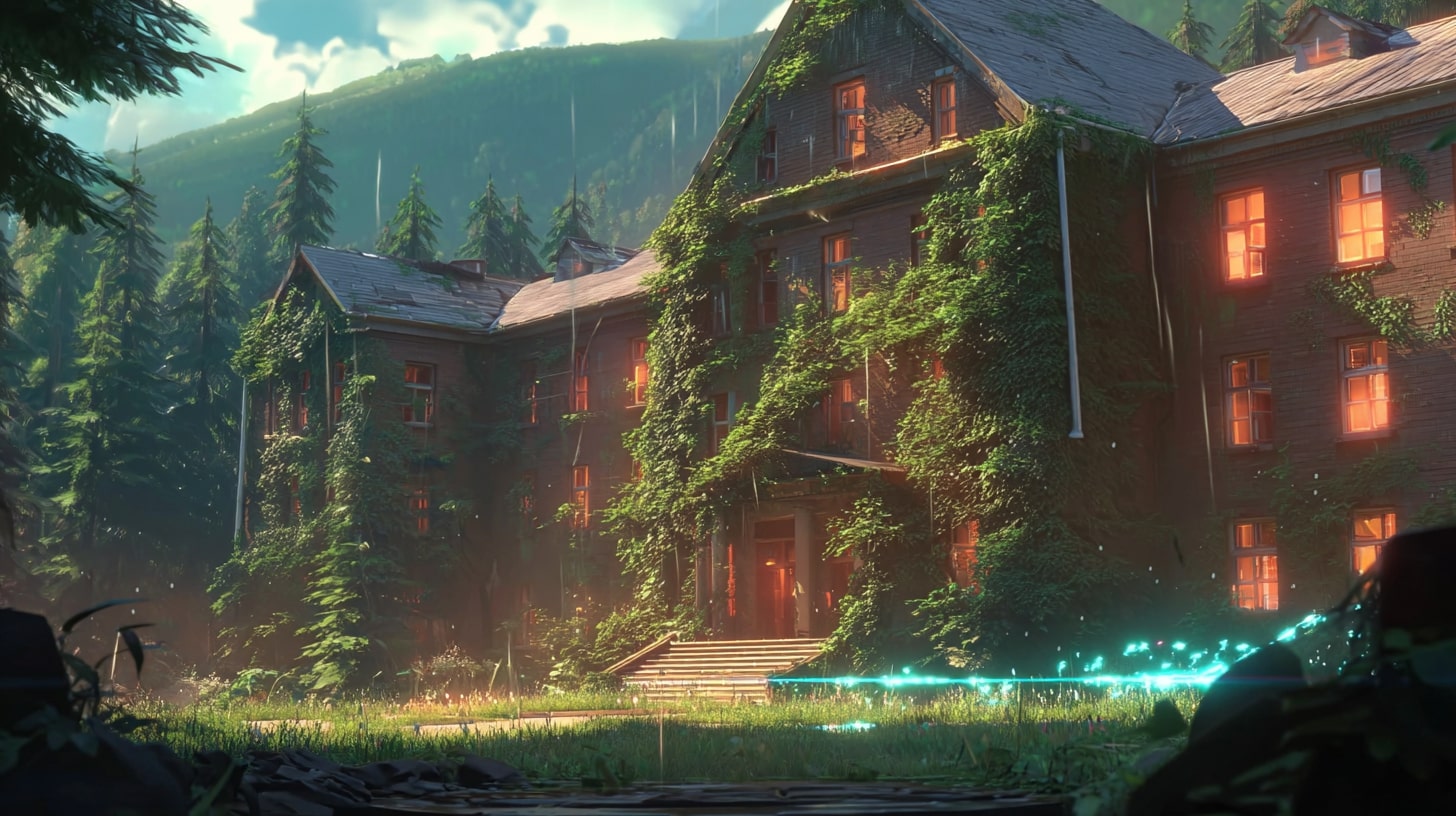
The field hospital was a farmhouse we'd commandeered outside Fredericksburg. The family had fled weeks ago, left behind furniture and chickens and a root cellar full of preserves that the soldiers had already emptied. Now the parlor held dying men on cots, and I moved between them doing the only work I knew how to do.
The orderlies put the stretcher down in the corner I'd claimed. Quieter there. Away from the screaming.
"What's his name?"
"Hollis. William Hollis. Private, 14th Connecticut."
They left. I pulled up a stool and looked at my new patient.
He was young. They were all young. Sandy hair plastered to his forehead with fever sweat, hands clutching the blanket like he could hold himself to the world through sheer grip. His eyes were open but not seeing much. The infection had already started clouding things.
"Private Hollis. Can you hear me?"
His eyes drifted toward my voice. "Who're you?"
"Name's Ezra. I'm going to sit with you for a while."
"You a doctor?"
"No."
"Chaplain?"
"Not exactly."
He seemed to accept this. Men in his condition stopped asking hard questions. They took whatever comfort showed up.
The work I do doesn't have a proper name. Some people call it tending. Others call it easing. My mother called it sitting with the dying, which is the most honest description.
When someone dies, whatever they've accumulated goes somewhere. All those experiences, all that living, it doesn't just vanish. It soaks into the place where they pass. Into the objects around them. Into the people holding their hands at the end.
Most folks can't feel it happening. They just sense that some rooms are heavier than others, that some battlefields hum with something they can't name.
I feel it. Always have. And somewhere along the way I learned that the release goes easier when someone helps. When you guide the dying through letting go instead of letting them thrash against it alone.
That's what I do. I sit with them. I help them release.
Private Hollis wasn't ready.
I could feel it the moment I touched his hand. He was holding on with everything he had, gripping his life like a man dangling over a cliff edge. The saturation inside him was tangled up tight, knotted around memories he refused to surrender.
"Tell me about yourself, Private."
"What's to tell." His voice was a rasp. "Farm boy from Connecticut. Joined up because everyone else did. Got shot because I was too slow getting behind a tree."
"You got family?"
Something shifted in his face. The grip on the blanket tightened.
"Daughter. Mary. She's six years old." He swallowed hard. "Wife died having her. Just been the two of us since."
"Who's looking after her now?"
"My sister. Back in Hartford." His eyes finally focused on me, sharp with sudden fear. "She doesn't know yet. That I'm—she doesn't know."
"Someone will tell her."
"I should be the one. I should be there." His voice cracked. "I promised Mary I'd come home. Promised her."
This was the knot. This was what he couldn't release. The promise to a little girl who was waiting for a father who would never walk back through the door.
"What's she like? Mary."
He was quiet for a long moment. When he spoke again, his voice had changed. Softer. The way people sound when they're remembering something good.
"She's got her mother's hair. Red like copper in the sun. Hates wearing shoes. Has to chase her down every morning to get them on her feet."
"Sounds like a handful."
"She is. God, she is." Almost a laugh. "Sharp as a tack, though. Could read before she turned five. My sister taught her the letters and she just... took off. Reads everything she can get her hands on now. The Bible. Newspapers. Recipe books. Doesn't matter."
"Smart girl."
"Smarter than me. She'll do something with her life. Something better than farming." His face twisted. "If she remembers me at all. Six years old. How much do you remember from when you were six?"
"Some things stay."
"Do they?"
I squeezed his hand. The saturation inside him pulsed against my palm, still knotted but starting to loosen as he talked.
"Tell me about the farm."
He talked for two hours.
About the apple orchard his grandfather had planted. About the creek where he'd learned to fish. About the smell of his mother's bread and the sound of his father's laugh and the way the fields looked in October when the leaves turned.
About meeting his wife at a barn dance when he was nineteen. About the way she'd looked at him like he was something worth looking at. About the three years they'd had together before Mary came and she went.
About sitting on the porch with Mary on his lap, watching fireflies blink in the dark, telling her that each light was a wish waiting to be caught.
He talked until his voice gave out and then he just breathed, ragged and wet, while I held his hand and felt the knots slowly coming undone.
"I don't want to go," he whispered finally.
"I know."
"There's so much I haven't done. So much she needs to learn. How to swim. How to drive a wagon. How to tell when a man is lying to her." Tears ran down the sides of his face into his hair. "I was supposed to teach her all of it."
"Someone else will."
"It should be me."
"It should. But it won't be."
He flinched like I'd struck him. I kept holding his hand.
"Private Hollis. William. Listen to me."
He listened. Dying men always listen, at the end. There's nothing else left to do.
"Everything you just told me. The farm. Your wife. Mary. All of it. That doesn't disappear when you do. It's part of the world now. You put it there."
"That's not—"
"Every time you held your daughter. Every time you taught her something or made her laugh or just sat with her watching fireflies. That mattered. It soaked in. It became part of her."
"She won't remember."
"She doesn't need to remember it here." I touched my temple. "She'll remember it here." I moved my hand to my chest. "The shape of it. The feeling. She'll grow up knowing someone loved her enough to chase her down every morning and put shoes on her feet. That's in her now. That's not going anywhere."
His breathing had changed. Slower. The fight draining out of him.
"What happens?" he asked. "After?"
"I don't know. Nobody does."
"But you've seen people go."
"Many times."
"What's it like?"
I thought about all the deaths I'd witnessed. The peaceful ones and the hard ones. The ones who fought until the last second and the ones who surrendered easy.
"It's like letting go of something heavy you've been carrying for a long time. Some people drop it all at once. Some people set it down piece by piece. But eventually everyone lets go."
"And then?"
"And then you're not carrying it anymore."
He was quiet for a while. The sounds of the hospital filtered in around us. Men groaning. Someone praying in the next room. A cart rattling past outside.
"Will you stay?" he asked. "Until it's over?"
"That's why I'm here."
He died around midnight.
I felt it when the last knot came undone. All that accumulated life, all those memories and experiences, releasing into the air around us. Some of it settled into the walls of the farmhouse. Some of it drifted out into the Virginia night. Some of it passed into me, the way it always did when I sat close enough.
For a moment I felt what he'd felt. The weight of a small girl in my arms. The smell of apple blossoms. The sound of someone I loved saying my name.
Then it faded, and William Hollis was gone, and I was just an old man sitting in a field hospital with another body to add to the count.
I found a piece of paper and a stub of pencil. Wrote down what I could remember. His daughter's name. His sister in Hartford. The farm with the apple orchard and the creek.
Someone would contact the family eventually. The army had systems for this. But the letter they sent would be formal. Regret to inform. Died in service. Generic words for a specific man.
I added my own letter to the pile. Told his sister that he'd talked about Mary at the end. That his last thoughts were of home. That he'd released peacefully, which was true in the ways that mattered.
It wasn't enough. Nothing I could write would be enough.
But his daughter would grow up knowing her father died thinking of her. That was something. Maybe that was everything.
The next morning they brought me another soldier. Young man from Pennsylvania with a hole in his chest and terror in his eyes.
"What's your name?" I asked.
"Michael. Michael Dunne."
"Tell me about yourself, Michael."
He started talking. I started listening.
The work continued.
Table of Contents
Get World Updates
Be notified when new stories or content are added to this world.