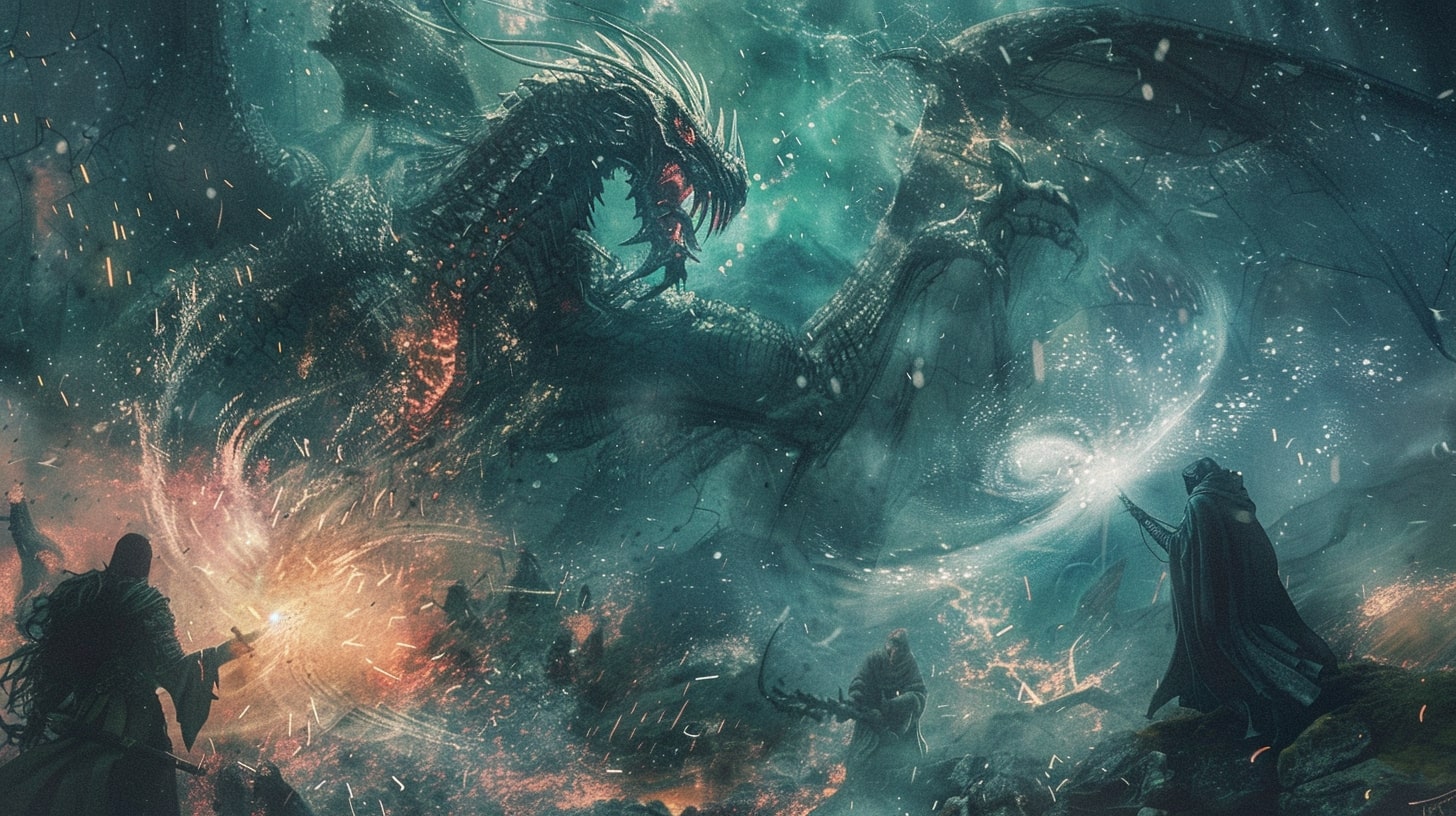
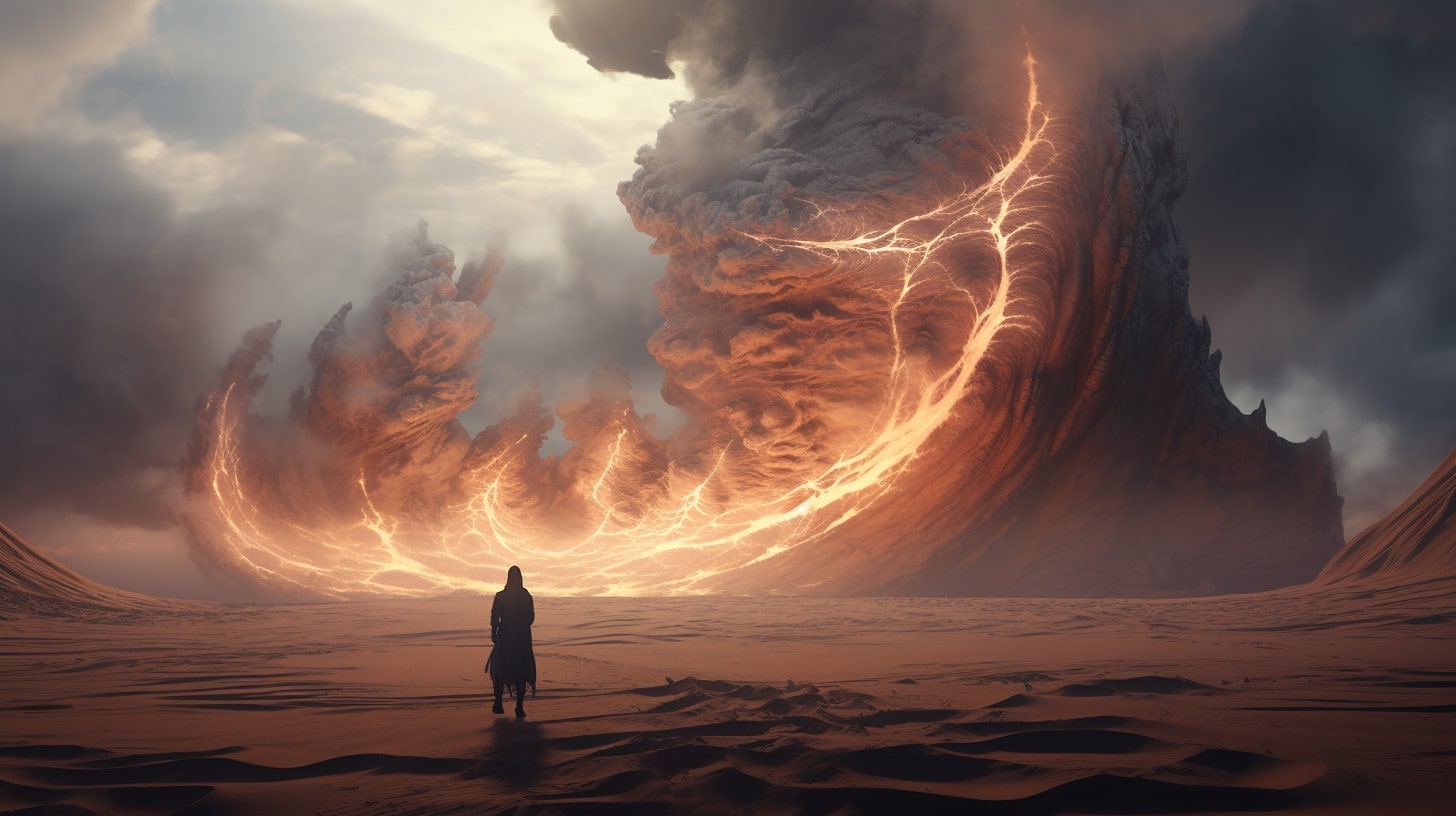
Most elemental magic in fantasy is a light show. A character raises a hand, fire comes out, the enemy is on fire, everyone moves on.
It looks great in the reader's head for about half a second and then it evaporates, because nothing was at stake in the casting. The fire didn't cost anything. It didn't run out.
It didn't burn the wrong thing. It was a special effect with a person attached.
Elemental magic spells become interesting at the exact moment the element stops being a visual and starts being a constraint. A fireball that drains the caster's body heat until their fingers go numb is a different spell than one that just appears. Water that you can only shape if there's water nearby is a different power than water you conjure from an empty desert.
The element has to push back. That push, the cost or the limit, is where the drama lives, and it's the thing most guides to elemental magic skip entirely because it's harder to write than a list of cool effects.
This is a guide to writing elemental magic spells for fire, earth, air, and water. It covers what each element does well, real example spells with their costs attached, and the craft principle that runs underneath all of it.
The principle is simple to state and hard to hold onto. An element is only as interesting as the price of using it.
Here's the full set of example spells covered below, if you want to skim before you read:
- Emberpull (fire). Ignites a target using the caster's own heat.
- Kindle Wall (fire). A wall of flame conjured from ambient air.
- Cinderlash (fire). A whip of fire drawn from an existing flame.
- Tideturn (water). Crashes a wave from a nearby water source onto a target.
- Stillheal (water). Closes wounds with drawn water.
- Frostbind (water). Freezes water in the air or ground to trap a target.
- Stoneskin (earth). Hardens the caster's skin into rock.
- Deepreach (earth). Senses everything touching the ground through vibration.
- Rootgrasp (earth). Roots and vines erupt to seize a target.
- Gale Shove (air). A blast of wind knocks enemies back.
- Featherfall (air). Slows a fall by thickening the air below.
- Windspeak (air). Carries a voice across distance.
The full table further down adds the cost or limit for each one, which is the part that matters.
What Elemental Magic Actually Is
Elemental magic draws power from the natural forces of the physical world, usually organized around the four classical elements: earth, air, fire, and water. A practitioner commands one or more of them, shaping stone, redirecting wind, throwing flame, freezing a river.
It's the oldest and most recognizable branch of fantasy magic, and it shows up everywhere from Avatar to the classical Greek elements to the color-coded mana of a card game.
Its familiarity is both the gift and the trap. Readers already understand fire and water. You don't have to spend three chapters explaining what wind does.
That's a real advantage.
It's also why so much elemental magic reads as generic. When the reader already knows what fire is, the only thing you're adding is how your world's fire behaves differently, and if the answer is "it doesn't, it's just fire but magic," you've added nothing.
The work is in the differences. Where does the power come from, what does it take out of the caster, and what can it not do.
If you're building a full system rather than a one-off spell, it helps to think about elemental magic inside the broader frame of a magic system with its own logic, rather than as a loose bag of tricks. The costs and limits below are what turn a bag of tricks into a system.
The One Principle: The Element Has to Push Back
Here's the difference between elemental magic that works and elemental magic that doesn't, and it has nothing to do with how impressive the spells are.
Cheap elemental magic treats the element as a resource the caster spends freely. You want fire, you get fire. The only limit is the caster's imagination and the plot's convenience.
This is the magic of a hundred forgettable fantasy novels, and readers feel the emptiness even when they can't name it. If the fire has no cost, then the fire can't create tension, because there's no version of the scene where the fire fails.
Good elemental magic treats the element as something that resists. It costs the body, or it costs materials, or it costs time, or it can only do what physics roughly allows.
Brandon Sanderson built an entire reputation on this idea, that the interest in a magic system comes from its limitations, not its powers. His often-quoted rule is that an author's ability to solve conflict with magic is directly proportional to how well the reader understands that magic.
Unlimited fire solves nothing dramatically. Fire that runs out, or fire that burns the caster's hands, or fire that can't be lit in the rain, generates story.
Water in Avatar: The Last Airbender is a clean example. Waterbenders are strong near water and nearly helpless in a desert. That single limit produces some of the show's best sequences, because the writers put waterbenders in dry places and forced them to solve problems with almost nothing.
The element pushed back, and the pushing back was the plot. Compare that to a system where the waterbender simply conjures water anywhere, anytime. The desert sequence doesn't exist. There's nothing to write about.
So before you design a single spell, decide how your element resists. Not what it can do. What it costs, and what it can't touch.
In my own world Dead Water, the ocean drained overnight and left a residue that crystallized into Tide Pearls, and a single thumb-sized pearl powers a city's wards for a year. But the source is also the danger. Touch the residue wrong and it mutates you into gills and scales, or takes your memory, and staying in the deep too long changes your body whether you want it to or not. The element is the power and the price at the same time.
Everything below assumes you're making that choice.
Fire Spells
Fire is the element writers reach for first and think about least. It's destruction, passion, heat, transformation, the campfire and the funeral pyre.
Fire spells tend to be offensive: fireballs, walls of flame, blades wrapped in heat. All of that is fine. The problem is that raw fire is the most obvious power in fantasy, which means it needs a cost more than any other element, or it reads as pure wish fulfillment.
The most useful thing you can do with fire is decide where the heat comes from. Fire is energy, and energy has to originate somewhere.
If the caster pulls heat from their own body to make flame, then a big fireball leaves them shivering and vulnerable. If they pull it from the surrounding air, the room goes cold and their allies feel it. If they need fuel, then fire in a stone corridor is weak and fire in a dry forest is catastrophic and hard to control.
Each of those choices turns a fireball from a button-press into a decision with consequences.
Example fire spells, written with their costs attached:
- Emberpull. The caster draws heat from their own core to ignite a target. Effective and silent, but every casting lowers their body temperature. Overuse leads to hypothermia, so a mage who throws too much fire ends the fight barely able to move.
- Kindle Wall. A wall of flame conjured from ambient air. It's a strong barrier, but it consumes the oxygen around it, which means casting it in an enclosed space slowly suffocates everyone inside, including the caster.
- Cinderlash. A whip of controlled fire that requires an existing flame to draw from. Useless in the rain or an empty stone room. Devastating in a burning building. The spell forces the caster to fight near fire, which changes how they move through a scene.
Notice that none of these are more powerful than a generic fireball. They're more interesting because using them creates a new problem.
That's the whole trick. The cost isn't a tax on the fun. The cost is the fun.
Fire also does quiet work that writers underuse. Cauterizing a wound, forging metal, sending a signal across a valley, keeping a starving group alive through a mountain night.
A character who can make fire but chooses to use it to keep a child warm instead of to kill tells you more about them than any battle. The element becomes characterization.
Water Spells
Water is the most flexible element and the one that rewards limits the most. It heals, it drowns, it freezes, it flows, it hides things and reveals them.
Because it can do so much, an unlimited water mage becomes a god very quickly, which is exactly why the interesting water systems clamp down hard on availability.
The governing question for water is simple: does the caster conjure water, or only move water that already exists? These are two completely different powers.
Conjuration makes the caster independent of their environment and therefore harder to threaten. Manipulation ties them to rivers, rain, wells, and their own blood, which means the environment becomes a live part of every scene.
Manipulation is almost always the better storytelling choice, because it lets the setting fight back.
Example water spells with their costs:
- Tideturn. The caster pulls a wave from a nearby body of water and crashes it down on a target. Powerful near a coast or river. Impossible in a dry place. A tideturn mage is a fortress by the sea and a liability in the mountains, and a smart enemy simply leads them inland.
- Stillheal. Water drawn across a wound to close it and slow bleeding. It works, but it draws the moisture from the caster's own body if no other water is available, so a healer with no river nearby heals others at the cost of their own dehydration.
- Frostbind. Freezing the water in the air or ground to trap a target in ice. It's slow to cast and easily broken by heat, which means it's a control spell, not a kill spell. It buys time. In a scene, that's often more valuable, and more tense, than raw damage.
Water carries emotional weight too, more than the other elements. It's tied to memory, grief, and cleansing in almost every human culture, and you can lean on that without stating it.
A water mage washing blood off their hands, unable to make it feel clean, is doing something the reader understands in their body. That association is free. Use it.
Earth Spells
Earth is stability, endurance, and patience. It's the least flashy element and the most quietly powerful, because everything is made of it or standing on it.
Earth spells shape stone, raise walls, trigger tremors, harden skin, grow or wither plants. The element is slow, heavy, and hard to move, and the best earth magic makes that slowness part of the cost rather than pretending it away.
The natural limit for earth is effort and material. Moving stone is like moving stone. It's heavy.
A mage who can raise a wall of rock should be exhausted by it, and should need actual earth to work with. On a wooden ship or a paved city street sealed in cobblestone, an earth mage might be nearly powerless, which is a wonderful vulnerability to hand a character who feels unstoppable on open ground.
Example earth spells with their costs:
- Stoneskin. The caster hardens their own skin into rock for protection. It works, but it makes them heavy and slow, so a stoneskin mage trades mobility for defense and can be simply walked around by a faster opponent.
- Deepreach. Sensing everything touching the ground for a wide radius through vibration. Nearly impossible to sneak up on such a mage. But the sense floods them in a crowd or a stampede, and a clever enemy can blind them by creating chaos on the ground.
- Rootgrasp. Vines and roots erupt to seize a target, but only where there's living soil. On stone or sand it does nothing. The spell tethers the mage to fertile ground and tells the enemy exactly where not to stand.
Earth is also the element of the long game, and that's a storytelling gift. Stone remembers. A tremor can be a threat that arrives slowly.
A wall can be raised over a night rather than in an instant. Earth magic that takes time creates suspense in a way that instant fire never can, because the reader watches the cost accumulate.
Air Spells
Air is freedom, speed, and intellect, and it's the trickiest element to write well because it's invisible. Fire and water and earth show up on the page as images.
Air is a force you can only see through its effects: dust lifting, a door slamming, a body thrown backward. That invisibility is a craft challenge, and it's also the element's signature, because air magic is the magic of things happening for reasons the enemy can't see.
The limit for air is usually subtlety and control. A gust that knocks a person over is easy. Wind fine enough to lift a single arrow off course, or to carry a whispered word across a battlefield, or to slow a fall without breaking the caster's legs, takes precision that a novice doesn't have.
Making air magic hard to aim, rather than hard to summon, gives you a different kind of tension. The power is there. The control is the question.
Example air spells with their costs:
- Gale Shove. A blast of wind to knock enemies back or deflect projectiles. Strong but indiscriminate, so it scatters allies and loose objects too, and casting it in a tight formation is as dangerous to your side as the enemy's.
- Featherfall. Slowing a fall by thickening the air beneath the caster. It works, but it requires constant focus the whole way down, so a single distraction, an arrow, a scream, drops them.
- Windspeak. Carrying a voice on the air to someone far away. Silent, useful for coordination, but the wind carries it both ways, and a skilled air mage on the other side can listen in. Communication and vulnerability in the same spell.
Air also governs breath, and breath is life. An air mage who can pull the wind from someone's lungs is holding one of the most frightening powers in fantasy, precisely because it's quiet.
No fire, no explosion, just a person unable to breathe for reasons no one can see. Handle that with care, because it's the kind of power that defines whether your air mage is a hero or something the reader is afraid of.
Quick Reference: Elements, Example Spells, and Costs
The point of the table below isn't the spells. It's the third column. If you take one thing from this guide, take the habit of always writing the cost down.
| Element | Example Spell | What It Does | The Cost or Limit |
|---|---|---|---|
| Fire | Emberpull | Ignites a target using the caster's own heat | Lowers the caster's body temperature, and overuse causes hypothermia |
| Fire | Kindle Wall | Wall of flame from ambient air | Consumes oxygen and grows dangerous in enclosed spaces |
| Fire | Cinderlash | A whip of controlled fire | Needs an existing flame to draw from, useless in the rain or bare stone |
| Water | Tideturn | Crashes a wave onto a target | Needs a nearby water source and is useless inland |
| Water | Stillheal | Closes wounds with drawn water | Dehydrates the caster if no water is nearby |
| Water | Frostbind | Freezes water to trap a target in ice | Slow to cast and easily broken by heat, a control spell not a kill |
| Earth | Stoneskin | Hardens the caster's skin to stone | Heavy and slow, trading mobility for defense |
| Earth | Deepreach | Senses everything touching the ground through vibration | Floods the caster in a crowd or stampede and can be blinded by chaos |
| Earth | Rootgrasp | Roots seize a target | Only works on living soil, nothing on stone or sand |
| Air | Gale Shove | Blast of wind knocks enemies back | Indiscriminate, scattering allies and objects too |
| Air | Featherfall | Slows a fall by thickening the air below | Requires unbroken focus, so a single distraction drops the caster |
| Air | Windspeak | Carries a voice across distance | The wind carries both ways and can be overheard |
Build your own version of this table for your world before you write a single fight scene. If you can't fill in the cost column for a spell, the spell isn't finished yet.
Combining Elements Without Making Mush
The temptation with a full elemental system is to let mages mix everything freely, and that's usually where systems fall apart. If every mage can do a little fire and a little water and a little earth, the elements lose their identity and you're back to a generic light show with more colors.
The stronger designs impose structure on combination. Some worlds let a person master only one element, which creates natural conflict between fire mages and water mages and turns the elements into something like factions or cultures.
Some allow paired elements with real interactions: steam from fire and water, lava from fire and earth, dust storms from earth and air. Those pairings are interesting precisely because they have their own new costs. Steam scalds the caster who makes it carelessly. Lava is nearly impossible to control once summoned.
The relationships between elements can carry as much story as the elements themselves. Fire and water opposing, earth and air balancing, the classic tensions.
If you want the interactions to feel like part of a coherent whole rather than ad hoc rules, it's worth grounding them in magic system rules that apply consistently, so the reader can trust that steam always scalds and lava always resists control.
Consistency is what lets the reader predict, and prediction is what lets you surprise them by breaking the pattern on purpose.
Elemental Magic and Society
The deepest elemental systems don't stop at what a mage can do in a fight. They ask what the existence of that power does to the world.
If people can command water, who controls the rivers. If people can raise stone, who builds the walls, and who's out of work. If fire mages exist, does anyone still need blacksmiths, and what happens to the ones who had that trade.
Magic that can grow crops, shape land, and control weather is economic power before it's ever a weapon, and a world that treats it only as a weapon feels thin.
The interesting questions are about access and control. Who gets trained. Who's forbidden. Which families hoard the good teachers. Which element is prestigious and which is peasant work.
An earth mage who spends their life reinforcing mine shafts for a wage is a more grounded figure than one who only ever throws boulders at monsters, and the wage-earning version tells the reader something true about how power actually gets used.
This is where elemental magic connects to the larger structure of your world, and it's worth thinking through how the whole elemental magic system sits inside your society rather than floating above it.
The costs you assigned to individual spells scale up here. If fire drains the body, then fire mages burn out young, and that has consequences for who becomes one and how they're treated. The personal cost and the social cost are the same idea at different sizes.
Putting It on the Page
When you actually write an elemental spell into a scene, a few habits keep it from going generic.
Show the cost in the moment, not in a footnote. If the fire mage's hands are freezing, let the reader feel them fumble the next thing they try to grab. The cost only matters if it's visible when it happens.
Let the element fail sometimes. A water mage who's always near water is boring. Strand them.
The spell that doesn't work is often the best scene the magic gives you, because it forces the character to be a person instead of a solution.
Picture it. A fire mage backs into a flooded cellar with a killer at the top of the stairs, reaches for the heat in her own chest the way she always has, and pulls too hard because she's scared.
The flame gutters out in the wet air anyway, and now she's shaking with cold in the dark, teeth chattering, with nothing left to throw and a man coming down the steps. The scene works because the cost arrived at the worst possible moment, and the fire that was supposed to save her is the reason she can barely stand.
Tie the element to the character, not just the plot. The reason someone chose fire, or fears water, or trusts stone, says something about who they are. Elemental affinity is a fast way to characterize if you let it mean something.
And resist the urge to escalate for its own sake. A bigger fireball is not a better scene. A fireball the character can't afford to cast, in a moment where they have to decide whether to pay the price, is a better scene every time.
The whole point of giving an element a cost is that the cost creates the choice, and the choice is the story.
Elemental magic spells are the most familiar magic in fantasy, which is exactly why they're the easiest to write badly and the most satisfying to write well. The familiarity means the reader arrives already understanding fire and water and earth and air.
Your only job is to make your version of them cost something. Do that, and a fireball stops being a special effect and becomes a decision. That's the difference the reader remembers.
If you want to keep building, it's worth looking at how elemental magic compares to the other major approaches in types of magic systems, since the same principle, that the limit makes the magic, holds no matter which branch you choose.
FAQ
What are the four elements in elemental magic?
The classical four are earth, air, fire, and water, each tied to a set of associations: earth to stability and endurance, air to freedom and intellect, fire to destruction and transformation, water to healing and adaptability.
Many fantasy systems add a fifth element, often spirit, aether, metal, or void, but the core four are the recognizable foundation most readers expect.
How do I make elemental magic spells feel original?
Originality in elemental magic almost never comes from the effect, since readers already know what fire and water do. It comes from the cost and the source.
Decide where the power originates, what it takes out of the caster, and what it can't do. A fireball that drains the caster's body heat or a water spell that only works near an existing water source feels fresh because the limitation is specific to your world, even though the raw element is familiar.
Should elemental magic have limits?
Yes, and the limits are what make it interesting. Unlimited elemental magic can't create tension, because there's no version of a scene where the magic fails.
The strongest elemental systems, like waterbending in Avatar, tie the element to the environment or the caster's body so that the power can run out, backfire, or be unavailable at the worst moment. The limit is where the story lives.
Can a character control more than one element?
They can, but freely mixing all four usually flattens the system into a generic light show.
Stronger designs restrict combination: one element per mage, which creates faction-like conflict, or paired elements with their own new costs, like steam from fire and water or lava from fire and earth. Structure around combination keeps each element's identity intact.
What is the best element for a fantasy protagonist?
There's no single best element. The right choice depends on the story you're telling and the vulnerability you want to hand the character.
Fire suits aggressive, high-cost protagonists who burn out. Water suits adaptable characters tied closely to their environment. Earth suits patient, defensive figures. Air suits clever, precise ones.
Pick the element whose limitations create the problems you want your character to struggle with.
How does elemental magic affect worldbuilding?
Deeply, if you let it. Magic that can grow crops, shape land, control water, and start fires is economic and political power before it's ever a weapon.
It shapes who holds the rivers, who builds the walls, which trades survive, and which families control the training. Treating elemental magic only as combat power leaves most of its worldbuilding potential on the table.