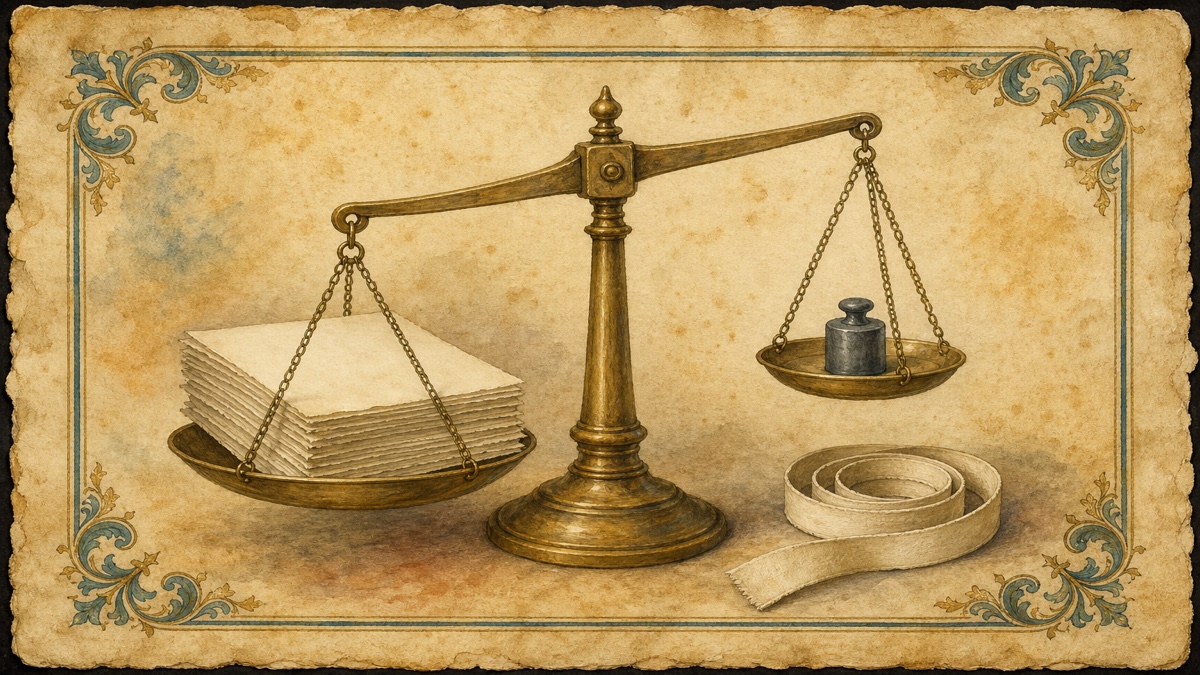
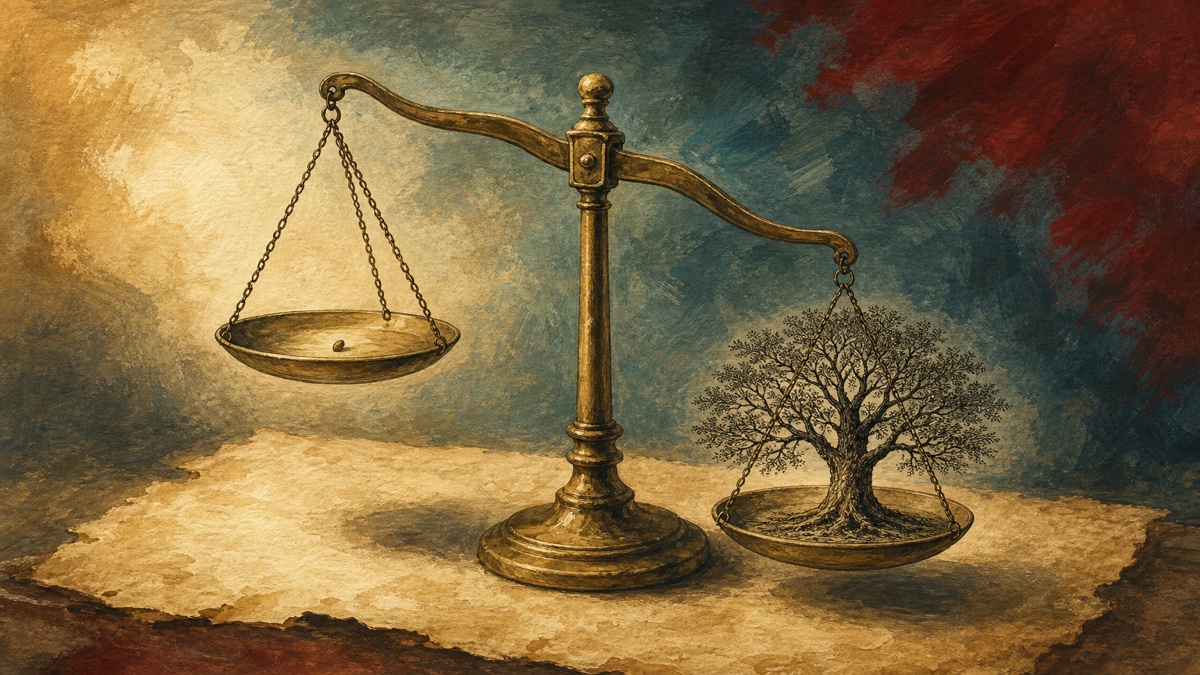
Theme is an idea plus an opinion. Without the opinion you have a topic, and a topic argues nothing.
Love is a topic. Justice is a topic. Neither of them can be true or false, which means neither can be the thing your book is about.
What love costs when you are the one who leaves is a theme. Someone could disagree with it. That is the test.
Topic, theme, moral
Three things get called theme and only one of them is.
| What it is | Example | Problem | |
|---|---|---|---|
| Topic | A subject the book touches | Grief | Says nothing, argues nothing |
| Theme | A claim about that subject | Grief shared becomes survivable, grief hidden calcifies | This is the useful one |
| Moral | An instruction to the reader | Always talk about your feelings | Readers resent being told |
The gap between topic and theme is where most drafts sit. A writer knows the book is "about family" and cannot work out why it feels like it is not about anything.
It is because "about family" is a category, not a position. Categories do not create tension. Positions do, because a position can be tested and can lose.
The gap between theme and moral matters just as much in the other direction. A moral closes the question. A theme keeps it open and lets the story argue it out, which is why readers tolerate one and resist the other.
Write the sentence
One sentence, structured as a claim about how something works.
Not "this book is about ambition." Try "ambition survives contact with love only when one of them is lying."
Some working examples in that shape. Loyalty to a person and loyalty to a principle cannot both be honoured, and choosing is the whole of adulthood. Or, people forgive the harm they understand and never forgive the harm that was careless.
If your sentence has no verb doing real work, it is still a topic. If it could be printed on a mug, it is a moral. You want the thing in between: specific, arguable, and slightly uncomfortable.
You do not need this before you start drafting. Plenty of writers find it at 40,000 words by noticing what they keep circling.
Theme lives in choices, not in dialogue
This is the part that separates a book with a theme from a book that talks about one.
A theme is proven by what characters choose when choosing costs them. Nothing else demonstrates it, and nothing else convinces a reader.
If your theme is that loyalty and principle cannot both be honoured, then someone has to sit in that vice and pick, and the picking has to cost them something the reader watched them value. Two people discussing loyalty over coffee does not do it, however well the dialogue is written.
The reliable structure is a false belief the protagonist holds at the start. They believe the easy version of your theme. The plot puts them under enough pressure that the easy version stops working, and the ending shows what they believe now and what believing it cost.
That is also why character motivation in writing and theme are the same conversation from two directions. Motivation is what a character wants, theme is what the book says about wanting it.
The antagonist carries the counterargument
The most common thematic failure is a book that argues with nobody.
If your theme is a claim, something in the book has to make the opposing claim credibly. Usually that is the antagonist, and the reason weak antagonists produce thin themes is that a villain who is simply wrong gives your theme nothing to push against.
Give the counterargument to someone sympathetic and the book gets harder to dismiss. A reader who can see why the other side is reasonable has to actually think, which is the whole point.
The strongest version is when the counterargument is right in some specific way that the protagonist has to concede. Then your ending is not a victory, it is a cost, and readers remember costs.
Symbols and motifs are the smallest part
Most school-level theme teaching is about symbols, which is why writers overrate them.
A motif is a repeated image that accumulates meaning: a locked door, a recurring debt, weather that shifts with a relationship. They work by repetition and variation rather than by standing for something, and their job is to make a theme feel present rather than to state it.
Use them lightly. A symbol the reader notices as a symbol has stopped doing its job.
They also cannot rescue a theme that is not built into the plot. Painting a green light on a story with no thematic spine gives you a story with no thematic spine and a green light.
How not to write a lecture
The fear is real and the fix is mechanical.
Do not let a character state your theme in dialogue. If the sentence you wrote earlier appears in anyone's mouth, cut it, because the moment a book says its own theme out loud the reader stops thinking and starts being told.
Do not resolve the argument too cleanly. If the theme wins with nothing lost, the book was rigged and readers feel it even when they cannot name it.
Do not attach the theme only to the protagonist. Let it show up in a subplot, in a minor character who chose differently, in the shape of the world. Repetition across different scales is what makes a theme feel discovered rather than delivered.
And do not explain the ending. The last page is where writers most often panic and add a paragraph clarifying what it all meant. Trust the reader, and if they cannot get there without the paragraph, the problem is upstream.
Where theme actually comes from
Most writers do not choose a theme. They find out what they have been arguing about.
Look at what you keep writing. The situation you return to, the kind of betrayal that interests you, the question you cannot leave alone. That is your theme showing up before you named it.
This is why the advice to pick a theme first often backfires. Chosen themes tend to produce dutiful books. Discovered themes produce books with heat in them, because the writer actually cares about the answer.
If you want a way in, creating believable characters is usually more productive than thinking about theme directly. Build someone who wants something badly and put them under pressure, and the theme surfaces on its own.
Where books lose it
Theme is not what stalls drafts. It is what makes a finished draft feel like it was worth writing, which is a different problem.
Drafts stall in the middle, around 30,000 words, with the outline intact and the writer simply not opening the file. Every thematic insight in the world does not help on that particular Tuesday.
Go the Distance is built for that stretch, taking a writer from finishing short pieces to a complete first draft at book length. It is organised around the two places drafts reliably die rather than around craft lessons.
Straight about the fit. If you have never finished a short story, start there. If you already finish novels, this is not for you.
Try this now
Write your sentence. Idea plus opinion, one line, arguable.
Then find the scene where a character chooses against their own interest because of it. If that scene does not exist yet, that is your next scene, and it is probably the most important one in the book.
Then find who disagrees, and make their case strong enough that you feel it.
Frequently Asked Questions
What is an example of a theme?
"Ambition survives contact with love only when one of them is lying" is a theme. "Ambition" on its own is a topic. The difference is that a theme makes a claim someone could argue with, which is what gives a story something to test across its whole length.
What is an example of a theme statement?
A theme statement is one sentence expressing an idea plus an opinion about it, such as "people forgive the harm they understand and never forgive the harm that was careless." It should be specific enough to exclude other stories and arguable enough that a reasonable person could take the opposite position.
What are common themes in writing?
The recurring ones are love, power, identity, justice, mortality, freedom, betrayal, ambition, family and belonging. Those are topics rather than themes, though, and they only become themes once you attach a position to them, which is also what stops your book reading like every other book on the same subject.
Does every story need a theme?
Every story that holds together has one, whether or not the writer planned it, because a story is a sequence of choices and choices imply a view about what matters. What you can skip is deciding it in advance. Many writers discover the theme partway through the draft by noticing what they keep circling.
How do I write a theme without being preachy?
Keep the theme out of dialogue and put it into choices that cost something. Give the strongest counterargument to a sympathetic character, resolve the question at a real price rather than cleanly, and resist explaining the ending. Preachiness comes from the book stating its conclusion instead of dramatising the argument.
What is the difference between theme and moral?
A moral is an instruction to the reader, like "always tell the truth." A theme is a claim the story tests and can complicate, like "truth told too late does more harm than the lie did." Morals close a question and readers resist them, themes keep it open and let readers arrive at the answer themselves.